




Understand JOIN Operations in SQL with simple explanations and real-world US examples to combine data across multiple tables effectively.
Data is a precious thing and will last longer than the systems themselves.
 JOIN Operations – The Core of Relational Databases
JOIN Operations allow SQL users to combine data from multiple tables based on related columns. Since real-world databases are normalized, information is rarely stored in a single table.
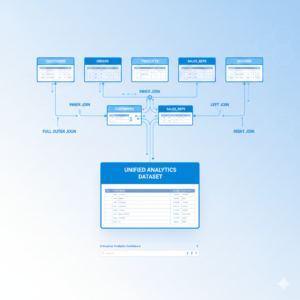
In US-based enterprises, JOIN operations are used extensively in customer analytics, finance systems, healthcare platforms, and e-commerce applications.
Why JOIN Operations Are Important?
Without JOINs:
-
Data remains fragmented
-
Reports become incomplete
-
Business insights are inaccurate
JOINs enable SQL to reflect real-world relationships, such as customers and orders or employees and departments.
 Understanding the INNER JOIN
The INNER JOIN returns only matching rows from both tables.
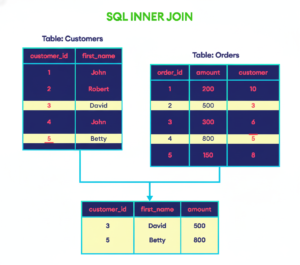
Syntax:
SELECT c.customer_name, o.order_id
FROM customers c
INNER JOIN orders o
ON c.customer_id = o.customer_id;
Example:
An online retailer retrieves customers who have placed orders.
LEFT JOIN Explained
The LEFT JOIN returns all records from the left table and matching records from the right table.
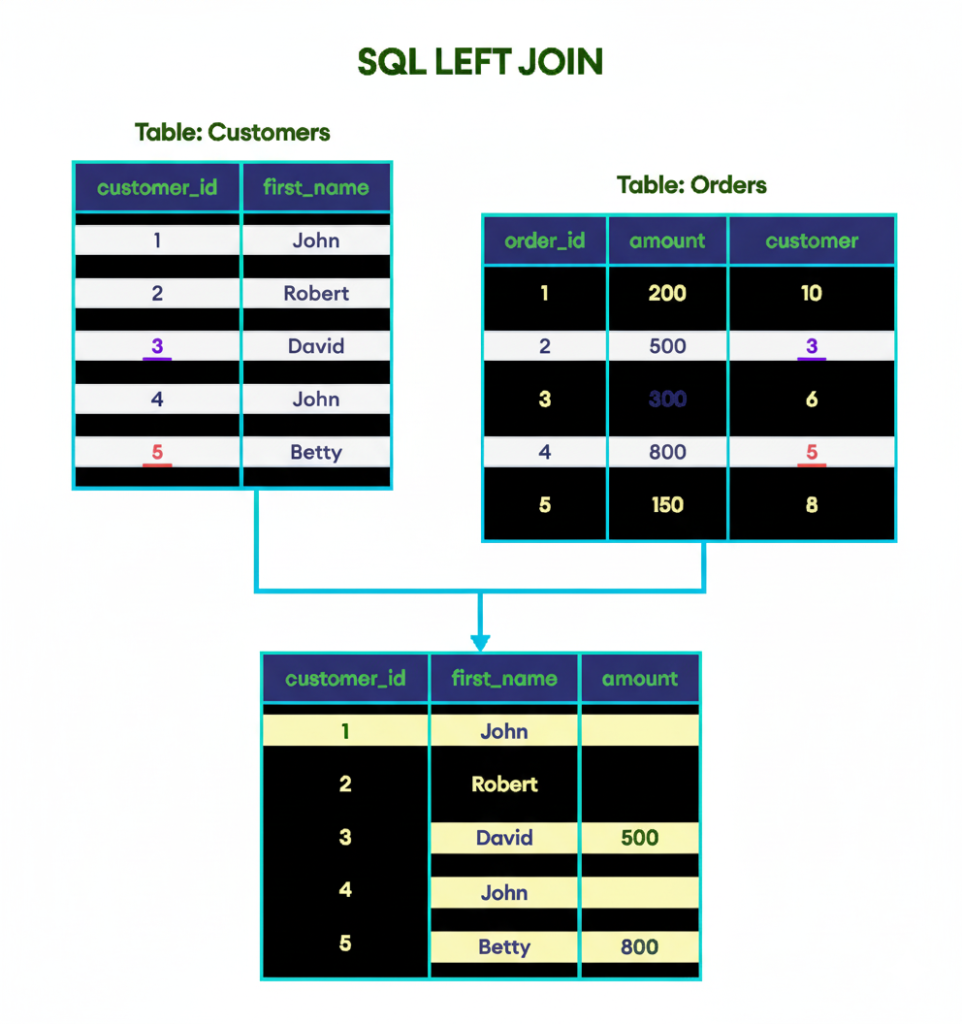
Syntax:
SELECT c.customer_name, o.order_id
FROM customers c
LEFT JOIN orders o
ON c.customer_id = o.customer_id;
Example:
A marketing team identifies customers who have not yet placed an order.
RIGHT JOIN Explained
A RIGHT JOIN returns all records from the right table and only the matching records from the left table.
If there is no match in the left table, the result will contain NULL values for the left table’s columns.
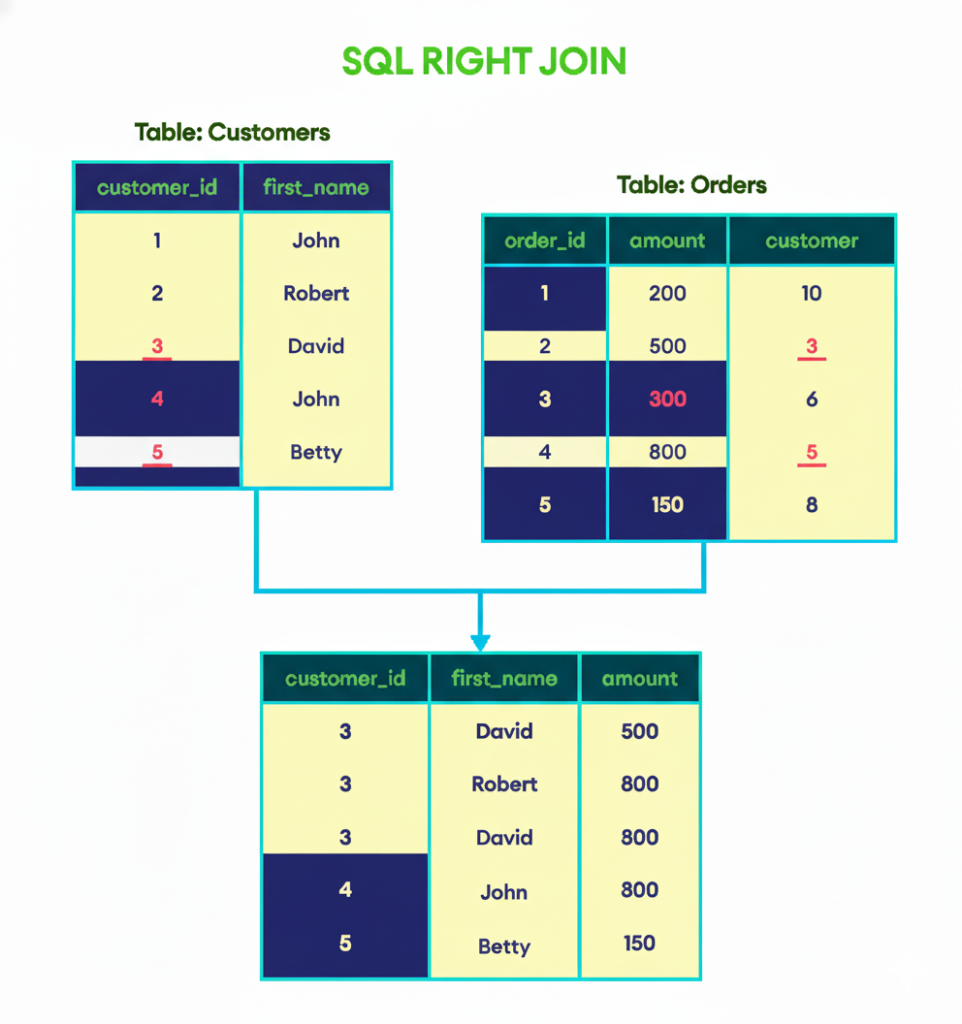
Syntax:
SELECT c.customer_name, o.order_id
FROM customers c
RIGHT JOIN orders o
ON c.customer_id = o.customer_id;
Example:
A US e-commerce company retrieves all orders, including those linked to deleted or inactive customer accounts, to ensure accurate sales reporting.
FULL JOIN Explained
The FULL JOIN (also called FULL OUTER JOIN) returns all records from both tables, whether matched or not.
Unmatched rows from either table appear with NULL values.
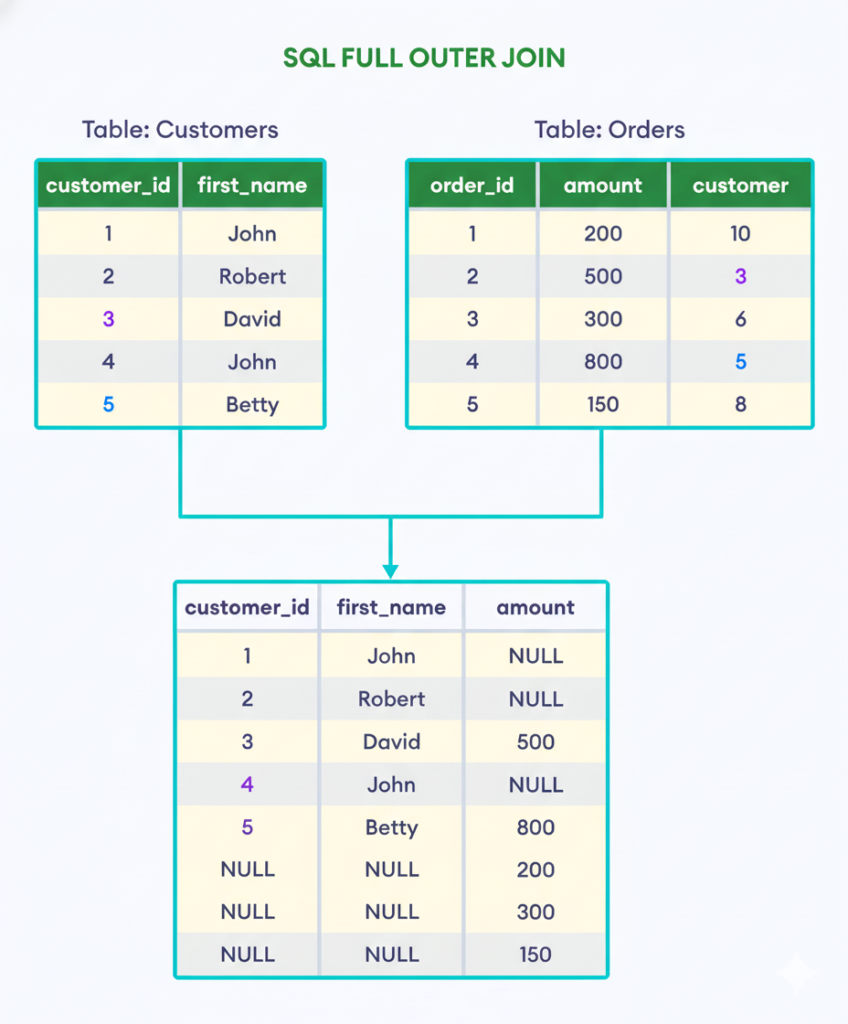
Syntax:
SELECT c.customer_name, p.policy_id
FROM customers c
FULL JOIN policies p
ON c.customer_id = p.customer_id;
Example:
US insurance companies analyze active and inactive insurance policies.
A FULL JOIN helps identify:
Complete policy coverage status for audits and compliance
Customers without active policies
Policies not linked to any customer
JOIN Operations in E-Commerce
E-commerce platforms use JOINs to:
- Combine customer and order data
- Track product sales
- Analyze shipping performance
JOINs enable comprehensive dashboards and reporting systems.
Joining Multiple Tables
SQL allows joining more than two tables.
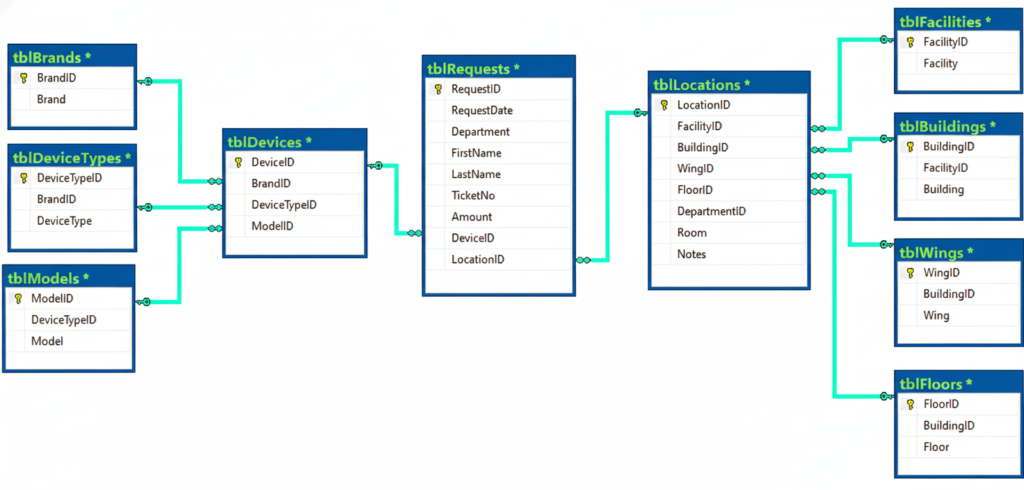
Example:
SELECT o.order_id, c.customer_name, p.product_name
FROM orders o
JOIN customers c ON o.customer_id = c.customer_id
JOIN products p ON o.product_id = p.product_id;
Example:
Retail systems generate detailed sales reports across customers and products.
Common JOIN Mistakes
Beginners often:
- Forget join conditions
- Create unintended Cartesian products
- Misuse LEFT and INNER JOINs
Understanding table relationships avoids these errors.
Performance Considerations
Efficient JOINs:
- Use indexed columns
- Avoid unnecessary joins
- Filter data early
These practices are essential for large-scale enterprise databases.
JOIN Operations in Healthcare Systems
US hospitals use JOINs to:
- Link patients with visits
- Combine billing and insurance data
- Track treatment outcomes
Accurate JOINs support compliance and patient care analytics.
Best Practices for JOIN Operations
To write professional SQL:
- Always specify join conditions
- Use table aliases for clarity
- Join only required tables
- Validate results carefully
These practices improve query readability and performance.
🔗 Official PostgreSQL JOIN documentation: (DoFollow):
https://www.postgresql.org/docs/current/tutorial-join.html
Frequently Asked Questions (FAQs)
1. Which JOIN is most commonly used?
INNER JOIN is the most frequently used JOIN.
2. Can JOINs slow down queries?
Yes, especially without proper indexing.
3. Are JOINs mandatory in normalized databases?
Yes. JOINs are essential for combining related data.
JOIN Operations are at the heart of relational databases. They enable meaningful data relationships, accurate reporting, and powerful analytics across industries.
Our DBS University provides a career focus SQL course which can help to make yourself industry ready.
Mastering JOINs is a major milestone in becoming proficient in SQL.
0 Comments