
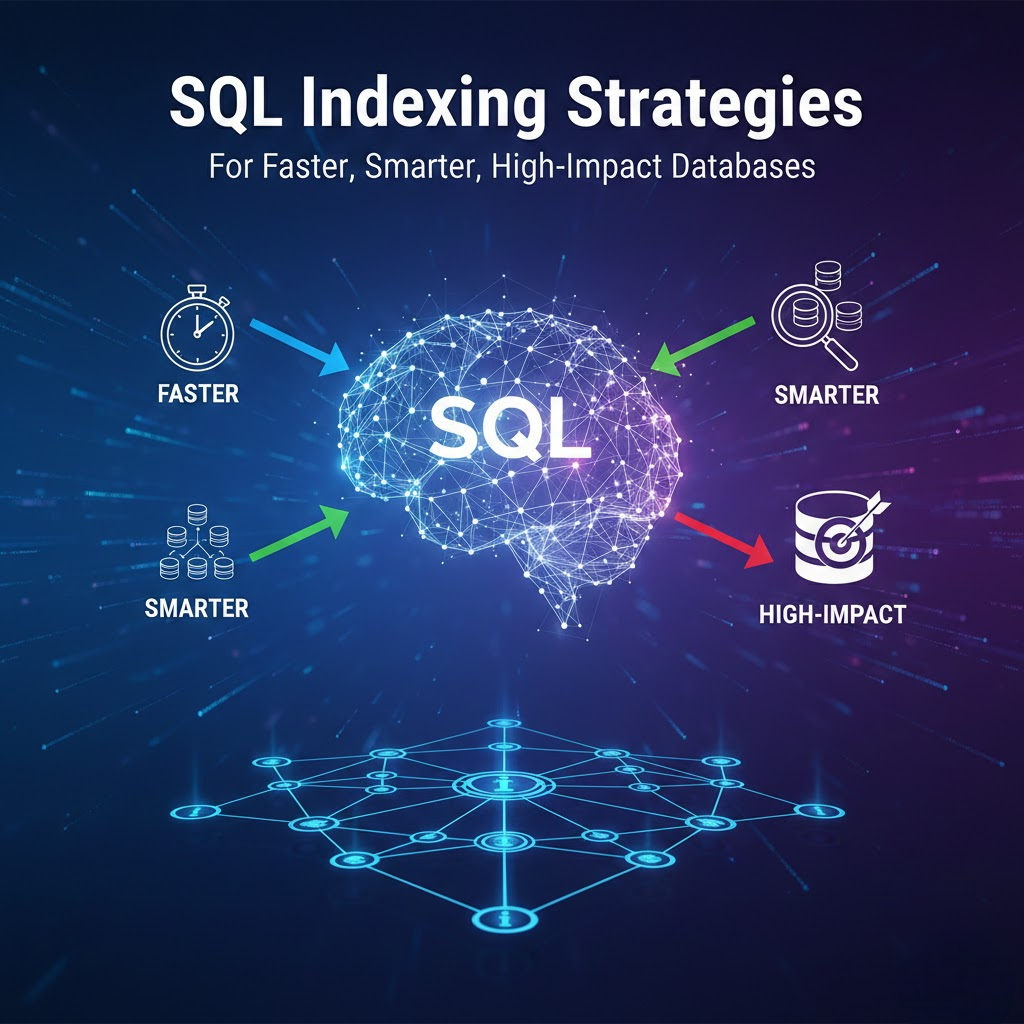





Discover 7 proven SQL query optimization strategies to boost database performance, reduce query execution time, and ensure efficient, reliable data processing for real-world applications.
Optimizing SQL queries is not just about speed; it’s about creating reliable, scalable, and maintainable data solutions that empower businesses to make smarter decisions.
 Introduction to SQL Query Optimization
SQL query optimization is the process of improving queries to run faster and consume fewer resources. Efficient queries are essential in US-based enterprises like finance, e-commerce, healthcare, and logistics, where large datasets are queried continuously.
Optimized queries reduce server load, minimize execution time, and deliver accurate, timely insights for critical business decisions.
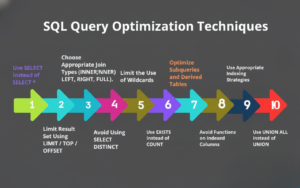
Why Queries Can Be Slow?
Common reasons for slow SQL queries:
-
Missing or inefficient indexes
-
Inefficient joins or subqueries
-
Querying large datasets without filters
-
Poorly structured SQL statements
Optimizing queries ensures high performance, especially for real-time dashboards, reporting, and transactional systems.
7 Essential SQL Query Optimization Strategies
 Strategy 1: Use Indexes Efficiently
Indexes help databases quickly locate data without scanning the entire table.
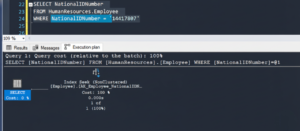
Syntax:
CREATE INDEX idx_customer_email ON customers(email);
Example:
E-commerce companies in the US index customer_email to speed up customer lookup during checkout.
Strategy 2: Avoid SELECT *
Selecting only the required columns reduces unnecessary data retrieval.
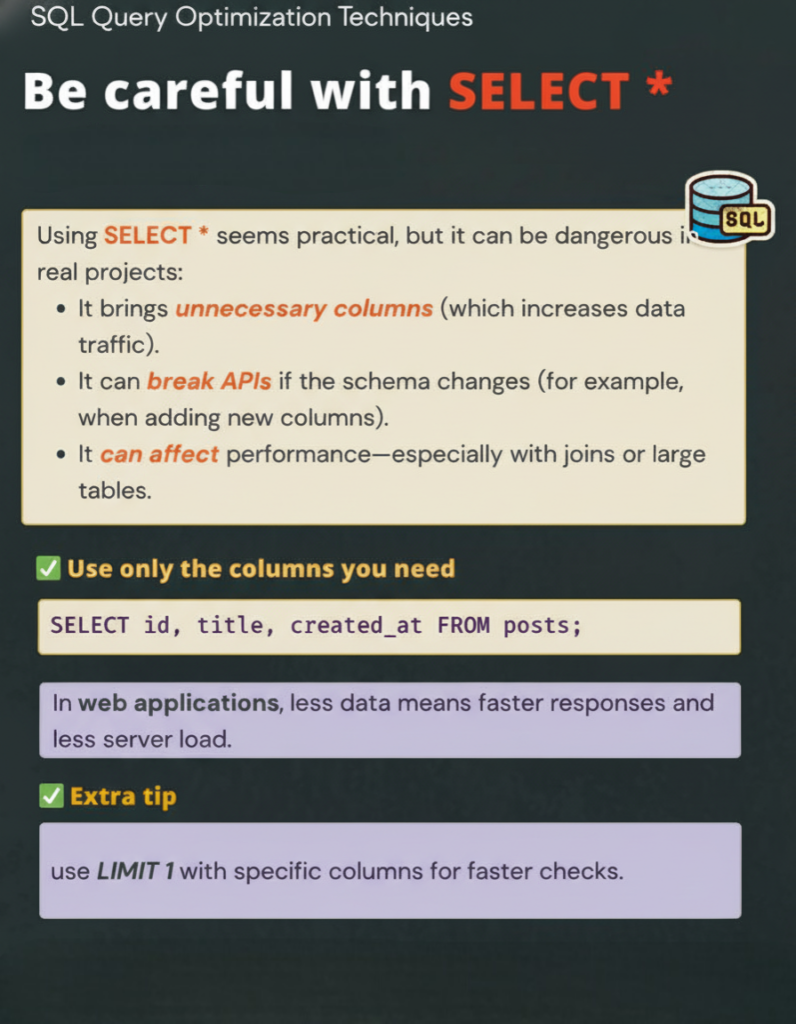
Syntax:
SELECT customer_id, order_amount
FROM orders
WHERE order_date >= '2025-01-01';
Example:
US finance systems retrieve only the necessary columns for quarterly reports, improving performance.
Strategy 3: Optimize Joins
- Prefer INNER JOIN over LEFT JOIN when possible
- Ensure joined columns are indexed
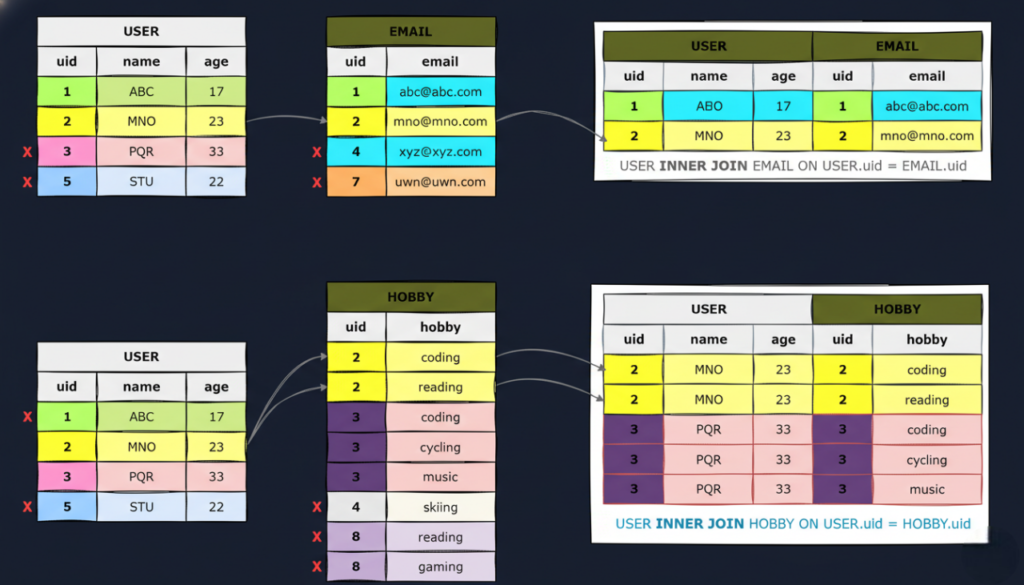
Syntax:
SELECT c.customer_name, o.order_id
FROM customers c
INNER JOIN orders o ON c.customer_id = o.customer_id;
Example:
Logistics companies optimize joins to track shipments across multiple tables efficiently.
Strategy 4: Use WHERE Clauses Effectively
Filter early to reduce the number of rows the database processes.
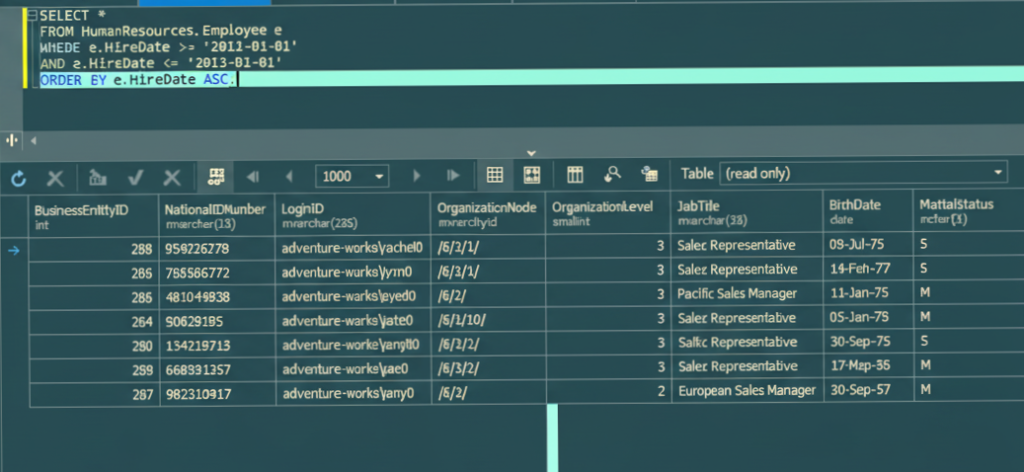
Syntax:
SELECT order_id, order_amount
FROM orders
WHERE order_status = 'Delivered';
Example:
Retail analytics dashboards filter completed orders to calculate accurate KPIs.
Strategy 5: Analyze Execution Plans
Use execution plans to identify bottlenecks and inefficient operations.
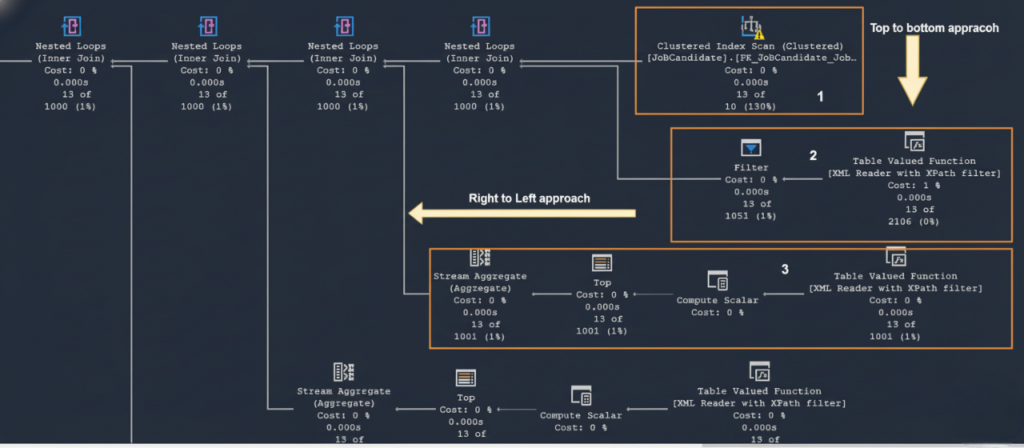
Syntax:
EXPLAIN SELECT * FROM orders WHERE order_amount > 500;
Example:
Financial analysts check execution plans to optimize queries on transactional datasets.
Strategy 6: Use CTEs and Subqueries Wisely
Breaking complex queries into Common Table Expressions (CTEs) improves readability and maintainability.
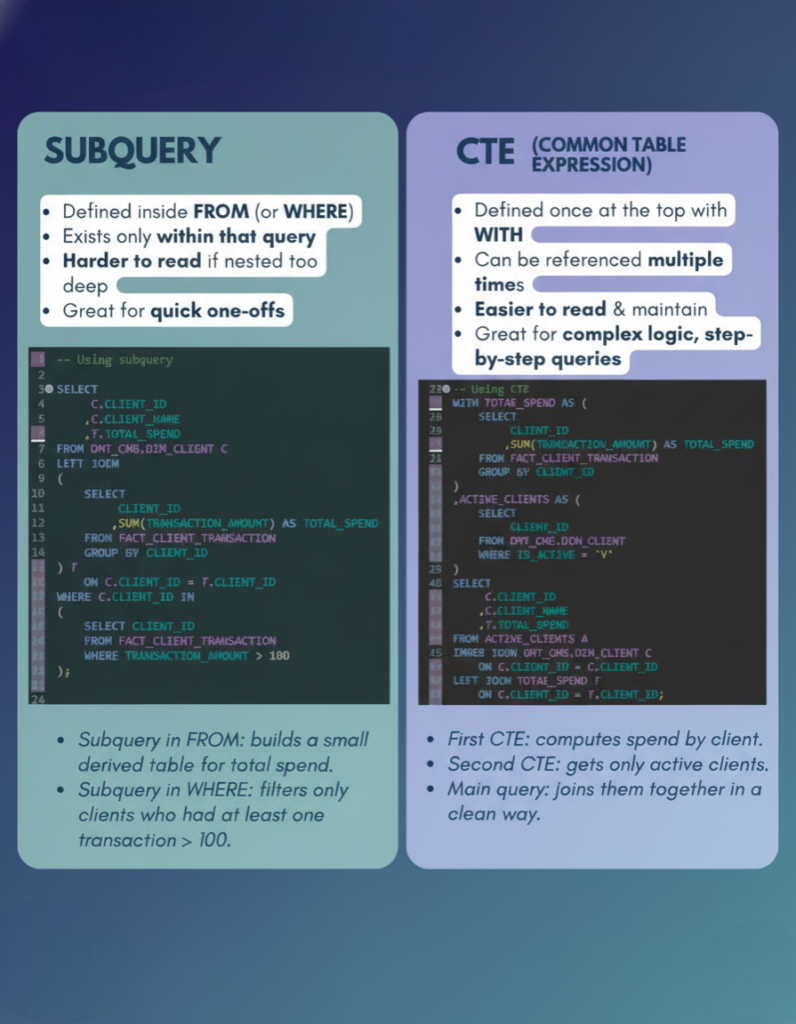
Syntax:
WITH monthly_sales AS (
    SELECT customer_id, SUM(order_amount) AS total
    FROM orders
    WHERE order_date >= CURRENT_DATE - INTERVAL '30 days'
    GROUP BY customer_id
)
SELECT * FROM monthly_sales;
Example:
E-commerce platforms calculate monthly sales summaries before joining with customer data.
Strategy 7: Avoid Functions on Indexed Columns
Using functions on indexed columns can prevent the database from using the index.
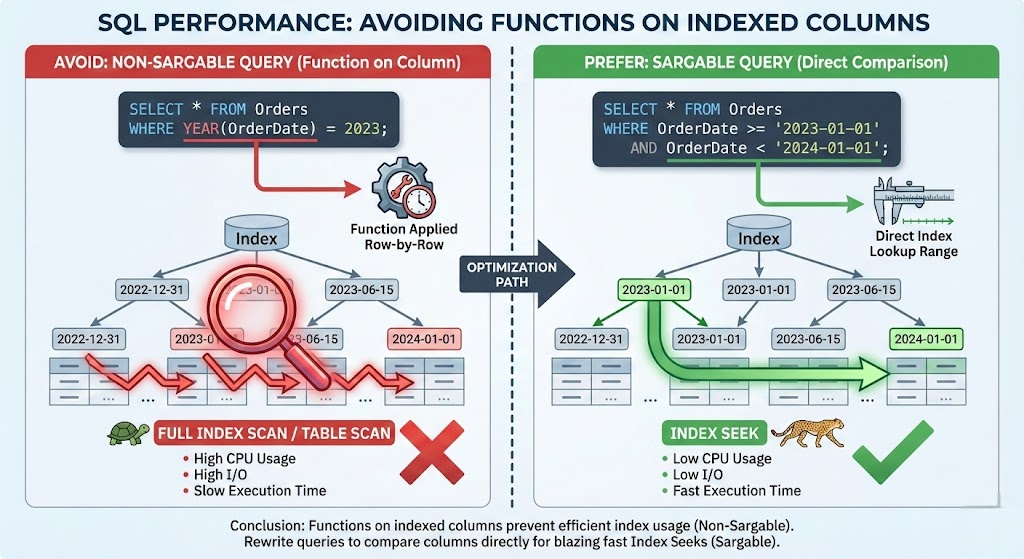
Syntax:
-- Less efficient
SELECT * FROM orders WHERE DATE(order_date) = '2025-01-01';

-- More efficient
SELECT * FROM orders
WHERE order_date >= '2025-01-01' AND order_date < '2025-01-02';
Example:
Healthcare analytics platforms optimize patient queries to quickly access large datasets.
Advanced Optimization Tips
| Technique | Description | US Example |
|---|---|---|
| Partitioning | Split large tables into smaller sections | Banking transactions by month |
| Query Caching | Store frequently accessed results | Stock trading dashboards |
| Index Maintenance | Update and rebuild indexes periodically | Enterprise ERP systems |
| Execution Plan Review | Adjust queries based on plan insights | Data warehouses in retail |
Common Mistakes to Avoid
- Over-indexing tables
- Using functions on indexed columns in WHERE clauses
- Ignoring execution plans
- Not updating table statistics for large datasets
Best Practices for SQL Query Optimization
 1. Plan Your Indexing Strategy
- Index frequently queried columns, but avoid over-indexing.
- Regularly monitor and maintain indexes.
2. Write Clean and Readable SQL
- Use CTEs and subqueries for complex queries.
- Avoid unnecessary nested queries.
3. Use Filtering Early
- Apply WHERE clauses before joins whenever possible to reduce row processing.
4. Analyze Execution Plans Regularly
- Identify bottlenecks, full table scans, and inefficient joins.
- Adjust queries based on execution plan insights.
5. Avoid Functions on Indexed Columns
- Prevents index usage; use range-based or direct comparisons instead.
6. Monitor Query Performance Continuously
- Track query times, resource usage, and slow queries for ongoing improvements.
7. Test Queries on Real Data
- Always benchmark optimization strategies on production-like datasets.
8. Use Proper Data Types
- Match column types to data to reduce casting and conversion overhead.
🔗 Official PostgreSQL Query Optimization Documentation (DoFollow):
https://www.postgresql.org/docs/current/performance-tips.html
Frequently Asked Questions (FAQs)
1. What is the difference between query optimization and tuning?
Optimization is automatic by the database engine; tuning is manual adjustments by developers.
2. Does indexing always improve performance?
Not always. Too many indexes can slow down inserts and updates.
3. Can CTEs improve query performance?
They improve readability and maintainability; performance depends on the database engine.
Mastering SQL query optimization ensures high-performance, scalable, and reliable databases.
Our DBS University provides a career focus SQL course which can help to make yourself industry ready.
By implementing indexes, efficient joins, filtering, execution plan analysis, and CTEs, US-based enterprises in finance, retail, and logistics can reduce execution time, save resources, and gain faster insights.
0 Comments