


How SQL Queries Work Inside Queries for Smarter Data Analysis?
Data tells the story — SQL decides how clearly it’s told.
Data Engineering Insight
 Introduction to Subqueries in SQL
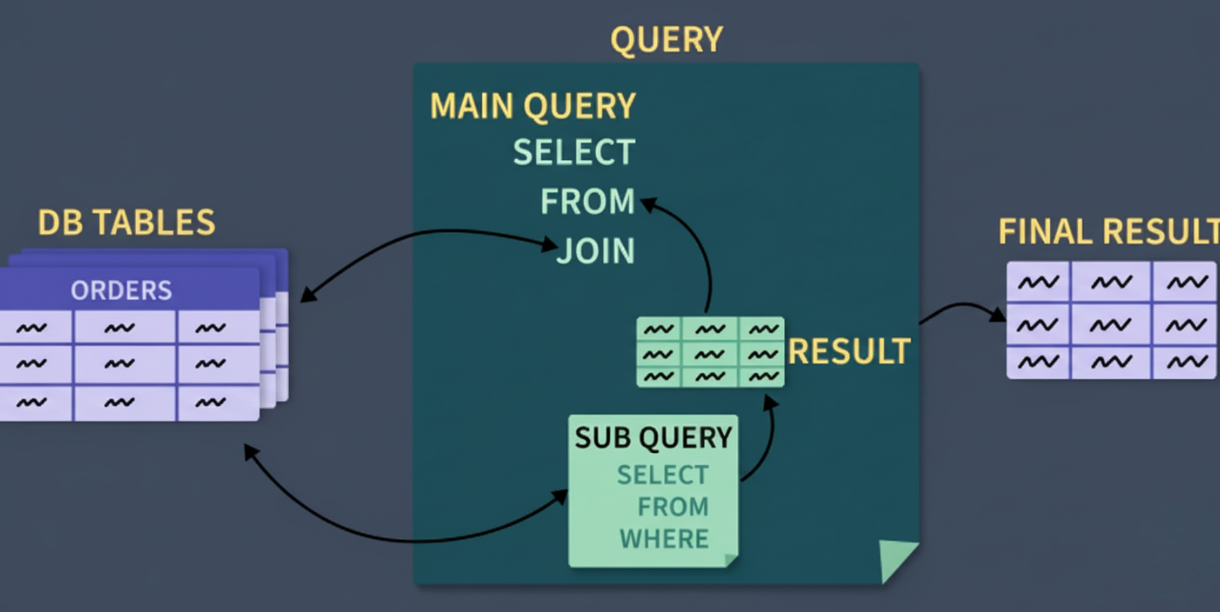
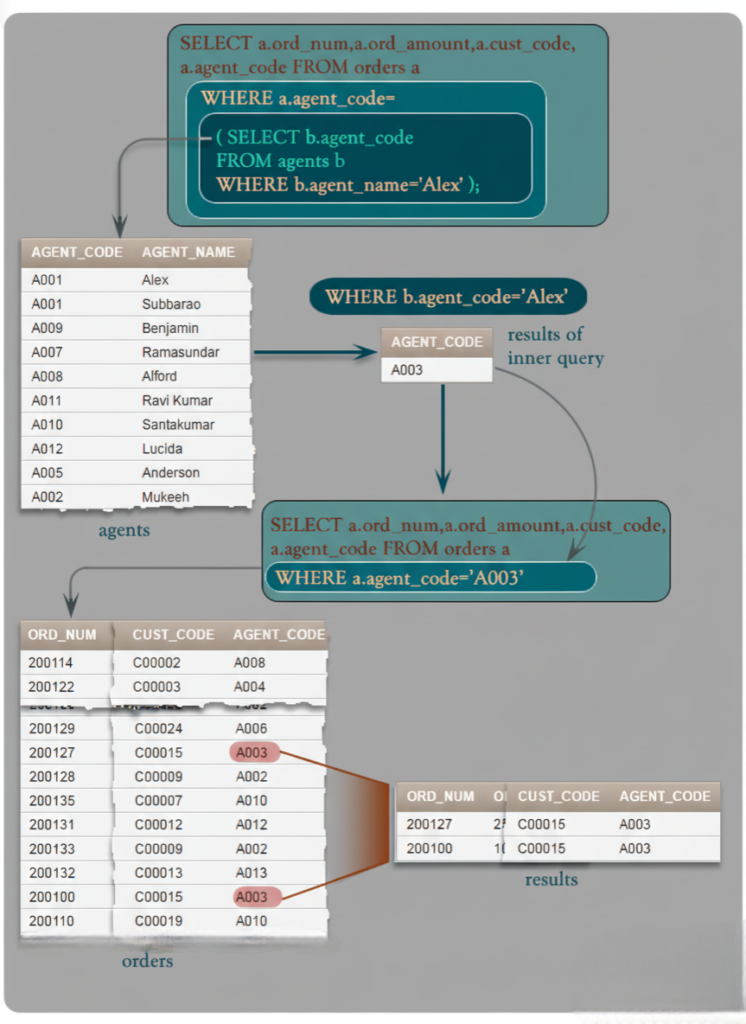
A subquery is a query written inside another SQL query.
It allows SQL to solve complex problems step by step, making queries more powerful and flexible.
Subqueries are widely used in US-based industries such as banking, healthcare, e-commerce, and insurance, where decisions often depend on results derived from other queries.
What Is a Subquery?
A subquery is enclosed within parentheses and executed before the outer query.
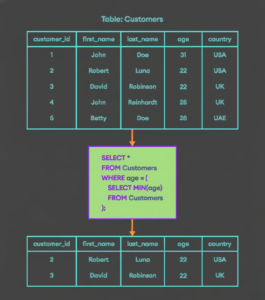
Key Characteristics
-
Can appear in
SELECT,FROM, orWHEREclauses -
Can return a single value, multiple values, or a full table
-
Helps break complex logic into manageable parts
Simple Subquery Example
Syntax:
SELECT employee_name
FROM employees
WHERE salary > (
SELECT AVG(salary)
FROM employees
);
Explanation
The inner query calculates the average salary, and the outer query retrieves employees earning above average.
Example:
A US-based tech company uses this query to identify high-performing employees eligible for performance bonuses.
Nested Queries Explained
A nested query is simply a subquery inside another subquery.
This allows SQL to process multiple layers of logic.
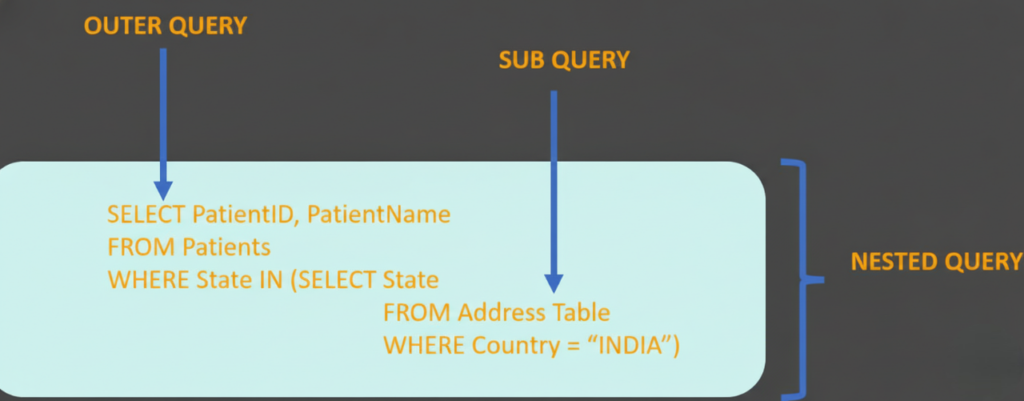
Example:
SELECT customer_name
FROM customers
WHERE customer_id IN (
    SELECT customer_id
    FROM orders
    WHERE order_amount > (
        SELECT AVG(order_amount)
        FROM orders
    )
);
Example:
A US e-commerce retailer identifies premium customers who place orders above the average order value, helping marketing teams target high-value buyers.
Types of Subqueries
1. Single-Row Subquery
Single-Row Subquery returns one value (used with =, >, <).
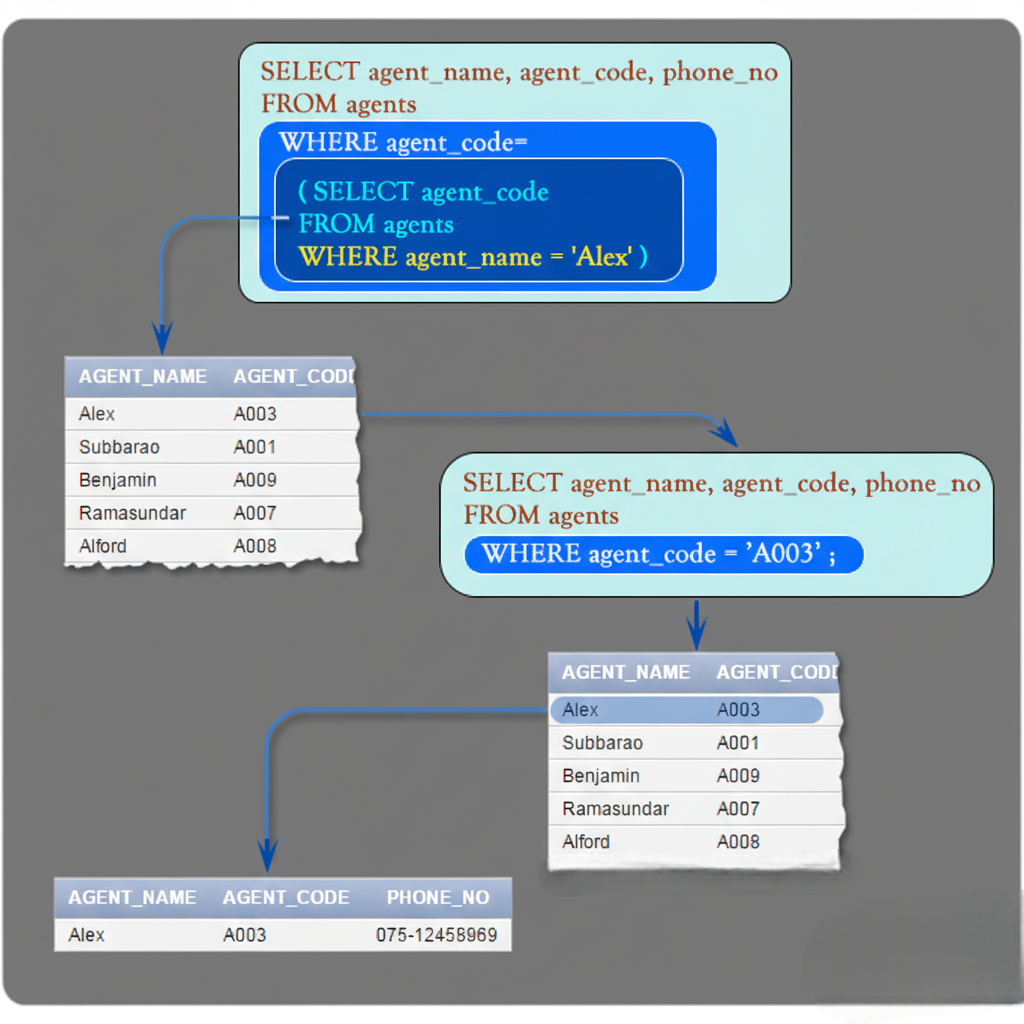
Example:
Finding the highest salary in a department.
2. Multiple-Row Subquery
Multiple-Row Subquery returns multiple rows (used with IN, ANY, ALL).
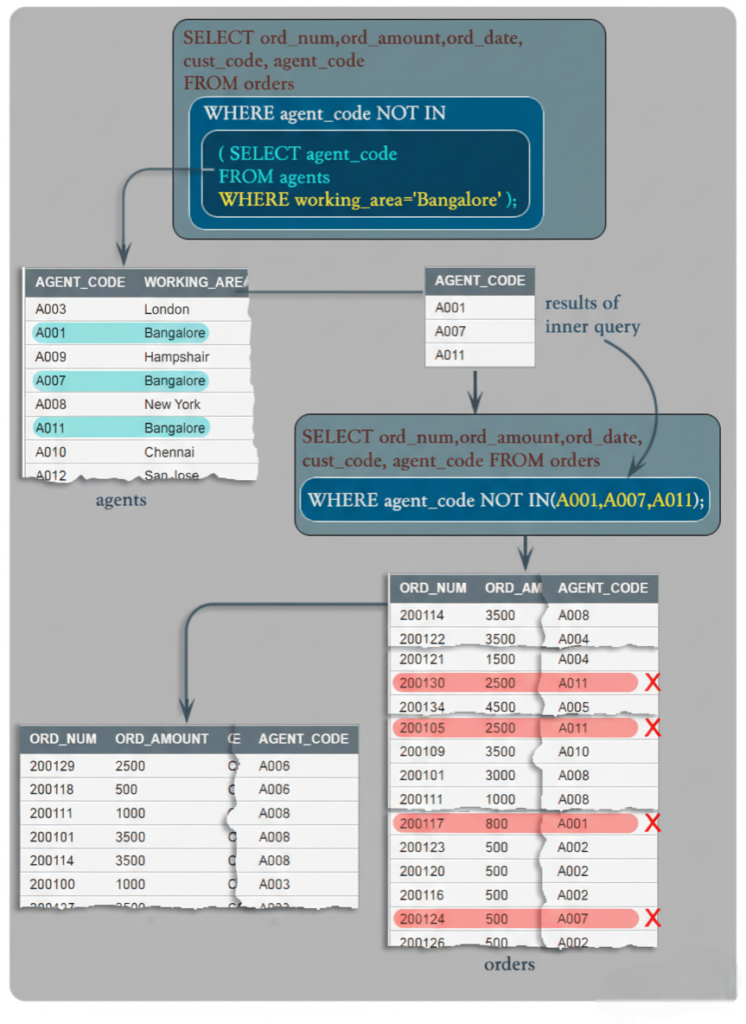
Example:
Finding customers who placed orders in multiple states.
3. Correlated Subquery
Correlated Subquery depends on the outer query and runs once for each row.
Example:
SELECT e.employee_name
FROM employees e
WHERE salary > (
    SELECT AVG(salary)
    FROM employees
    WHERE department_id = e.department_id
);
Example:
A US healthcare organization compares salaries within each department to ensure fair compensation.
Real-World Use Cases
- Banking: Identifying customers with balances above branch averages
- Healthcare: Finding patients with costs exceeding treatment averages
- Retail: Detecting products priced higher than category averages
- Insurance: Flagging claims exceeding typical payout thresholds
Subqueries support better insights, compliance, and decision-making.
Key Takeaways
- Subqueries enable step-by-step filtering
- Nested queries solve complex business logic
- Widely used in real-world US business analytics
- Essential for intermediate-to-advanced SQL users
Subqueries vs JOINs – When to Use What
| Aspect | Subqueries | JOINs |
|---|---|---|
| Purpose | Used to break complex logic into smaller, step-by-step queries | Used to combine data from multiple tables directly |
| Readability | Easier to understand for beginners | Can be harder to read in complex queries |
| Performance | Slower for large datasets | Faster and more efficient for large datasets |
| Execution | Inner query executes first | Tables are joined and processed together |
| Use Case | Best for filtering based on calculated values | Best for retrieving related data across tables |
| Scalability | Not ideal for high-volume production queries | Preferred for enterprise-level systems |
| Common Clauses | WHERE, SELECT, FROM | FROM clause with ON condition |
| Maintenance | Easier during analysis and testing | Better for long-term production use |
| US Industry Usage | Analytics, reporting, ad-hoc queries | Banking systems, healthcare platforms, retail systems |
Subqueries in the SELECT Clause
Subqueries can also be used to calculate values dynamically in the SELECT clause.
Example:
SELECT
    employee_name,
    salary,
    (SELECT AVG(salary) FROM employees) AS avg_salary
FROM employees;
Example:
A US-based HR analytics team compares individual employee salaries against the company-wide average to maintain compensation transparency.
Subqueries in the FROM Clause (Derived Tables)
When a subquery is used in the FROM clause, it behaves like a temporary table.
Example:
SELECT department_id, avg_salary
FROM (
    SELECT department_id, AVG(salary) AS avg_salary
    FROM employees
    GROUP BY department_id
) dept_avg
WHERE avg_salary > 70000;
Example:
A US enterprise organization identifies departments with above-average salary spending for budget planning and financial forecasting.
Common Mistakes to Avoid
- Writing deeply nested subqueries unnecessarily
- Using subqueries where a JOIN is more efficient
- Forgetting that correlated subqueries run multiple times
- Not indexing columns used in subqueries
Avoiding these mistakes improves query performance and maintainability.
Performance Considerations
While subqueries are powerful, they can sometimes be less efficient than JOINs.
Best Practices for Writing Subqueries
- Keep subqueries simple and readable
- Use clear aliases
- Test inner queries separately
- Optimize with indexes
- Convert to JOINs when performance matters
Following these practices is standard in US-based production SQL environments.
🔗 Official PostgreSQL JOIN & Subquery Documentation (DoFollow):
https://www.postgresql.org/docs/current/tutorial-subquery.html
Real-World Scenario: Fraud Detection (Banking)
Banks in the US use nested subqueries to identify suspicious transactions.
Example Logic
- Find transactions above the average amount
- Compare them against customer transaction history
- Flag unusual behavior for review
Subqueries enable layered filtering, making them ideal for such scenarios.
Frequently Asked Questions (FAQs)
1. What is the main difference between a subquery and a JOIN?
A subquery runs inside another query and is useful for step-by-step filtering.
A JOIN combines tables directly and is more efficient for large datasets.
2. Are subqueries slower than JOINs?
Yes, in many cases. Subqueries—especially correlated ones—can be slower.
JOINs are preferred in US enterprise systems for better performance.
3. Can subqueries replace JOINs completely?
No. Subqueries improve readability, but JOINs are better for scalable production queries.
4. Is PostgreSQL good for handling complex subqueries?
Yes. PostgreSQL is highly optimized for complex subqueries and nested queries, making it popular in US data engineering projects.
Subqueries and nested queries are essential tools in SQL that allow developers and analysts to solve complex problems with clarity and precision. By breaking queries into logical steps, subqueries make SQL more readable and flexible.
Our DBS University provides a career focus SQL course which can help to make yourself industry ready.
Understanding when and how to use subqueries will significantly improve your ability to write efficient, scalable, and business-ready SQL queries.
0 Comments